Dhruva Space gets Rs 105 cr from Centre for developing satellite platform




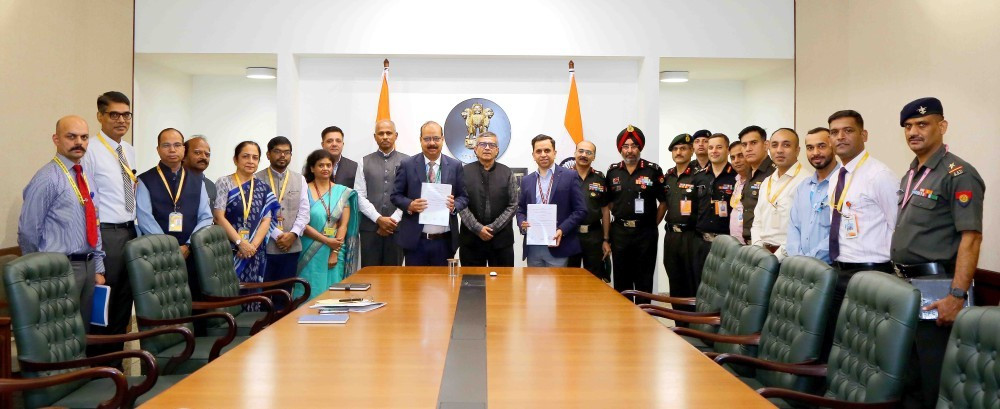
Hyderabad-based Dhruva Space has received a grant of Rs 105 crore from the Centre's Research, Development and Innovation Fund (RDIF) for Project Garud, the start-up's programme that focuses on developing a standardised 500 kg-class platform designed for high-volume satellite deployment.
A satellite platform is a component of a satellite that provides essential services to the payload and enables the mission objectives, such as power and communication.
In a statement on Thursday, Abhay Egoor, co-founder of Dhruva Space, said, “Through RDIF, Dhruva Space is building an indigenous satellite platform and manufacturing ecosystem capable of supporting high-volume deployment requirements across communications, intelligence, and strategic applications.”
The satellite platform will have a flat-pack architecture that enables efficient launch stacking, faster system integration, and improved deployment timelines, making it suitable for large-scale satellite deployments, the company said.
According to the company, existing systems are typically custom-built, resulting in extended development cycles and limited reusability.
By establishing a made-in-India architecture, Project Garud will reduce reliance on foreign satellite platforms and subsystems while strengthening supply chain resilience for communications and intelligence infrastructure, said the company in a statement.
“Dhruva Space will also establish the infrastructure, tooling, and industrial processes required for high-volume satellite manufacturing at scale. The roadmap is designed around a production cadence capable of supporting up to two satellites per day, enabling an annualised manufacturing potential of approximately 500-600 satellites across multiple mission configurations,” it added.