Cassini spacecraft begins second extension mission
‘The Cassini Solstice Mission’ announced earlier this year will allow scientists to continue observations of Saturn's rings and the magnetic bubble around the planet, known as the magnetosphere.


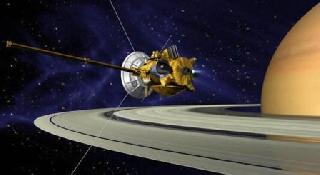
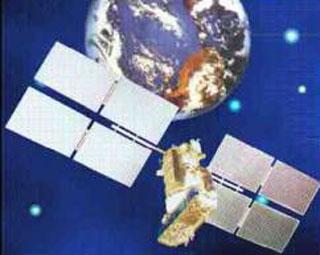
Caption: Artist concept of Cassini spacecraft. A NASA/JPL photo

PASADENA, CALIFORNIA (BNS): NASA's Cassini spacecraft Monday began the Cassini solstice mission.
The second mission extension will take Cassini a few months past Saturn's northern summer solstice (or midsummer) through September 2017. It will enable scientists to study seasonal changes and other long-term weather changes on Saturn and its moons.
Cassini launched in 1977 has made a number of scientific discoveries, including, previously unknown characteristics of the Earth-like world of Saturn's moon Titan, and the plume of water vapour and organic particles spewing from another moon, Enceladus.
‘The Cassini Solstice Mission’ announced earlier this year will also allow scientists to continue observations of Saturn's rings and the magnetic bubble around the planet, known as the magnetosphere.
Near the end of the mission, the spacecraft will make repeated dives between Saturn and its rings to obtain in-depth knowledge of the gas giant. During these dives, the spacecraft will study the internal structure of Saturn, its magnetic fluctuations and ring mass.
Cassini entered orbit around Saturn in 2004 and received the first mission extension in 2008. Mission managers had originally planned for a four-year tour of the Saturnian system, NASA said.
The second mission extension will take Cassini a few months past Saturn's northern summer solstice (or midsummer) through September 2017. It will enable scientists to study seasonal changes and other long-term weather changes on Saturn and its moons.
Cassini launched in 1977 has made a number of scientific discoveries, including, previously unknown characteristics of the Earth-like world of Saturn's moon Titan, and the plume of water vapour and organic particles spewing from another moon, Enceladus.
‘The Cassini Solstice Mission’ announced earlier this year will also allow scientists to continue observations of Saturn's rings and the magnetic bubble around the planet, known as the magnetosphere.
Near the end of the mission, the spacecraft will make repeated dives between Saturn and its rings to obtain in-depth knowledge of the gas giant. During these dives, the spacecraft will study the internal structure of Saturn, its magnetic fluctuations and ring mass.
Cassini entered orbit around Saturn in 2004 and received the first mission extension in 2008. Mission managers had originally planned for a four-year tour of the Saturnian system, NASA said.