Robot to fix ailing satellites in orbit
Researchers at Canada's leading university are working on a robotic system that would help service more than 8,000 sick satellites cluttering the cosmos, and are beyond the repair of ground-based operations



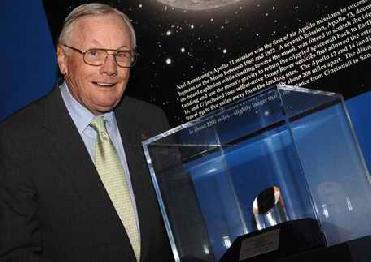
Caption: Professor Michael Greenspan along with a student demonstrating a new robotic tracking system that will be used to enable repairs of orbiting satellites

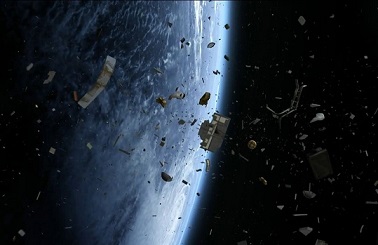
ONTARIO (BNS): Researchers at Queen's University are developing a new robotic system to service more than 8,000 satellites now orbiting the Earth, beyond the flight range of ground-based repair operations. When the high-flying celestial objects malfunction or simply run out of fuel they become “space junk†cluttering the cosmos.
“These are mechanical systems, which means that eventually they will fail,†said Electrical and Computer Engineering professor Michael Greenspan, who leads the Queen's project. But because they are many thousands of kilometres away, the satellites are beyond the reach of an expensive, manned spaced flight, while Earth-based tele-robotic repair isn't possible in real time.
According to Greenspan this problem can be tackled by developing tracking software that will enable an Autonomous Space Servicing Vehicle (ASSV) to grasp the ailing satellite from its orbit and draw it into the repair vehicle's bay. “Once there, remote control from the ground station can be used for the repair. The repair itself doesn't have to be done in real time, since everything is in a fixed position and a human can interact with it tele-robotically to do whatever is required,†he said.
Greenspan said that computer vision was the main technical challenge of grasping the satellites. “Since these objects circle the globe in ‘geosynchronous' orbit, their speed is synchronised with the Earth's rotation. The robotic system must recognise the satellite first, then determine its motion and match that motion before grabbing it,†he said.
The Queen's scientist said that due to the harsh illumination conditions in space, conventional video cameras are of limited use. “The preferred sensor is a form of light-based radar called LIDAR, which provides a set of 3D points that accurately measure the surface geometry of the satellite,†Greenspan said.
Emphasising on the use of flexible manufacturing systems, Greenspan said that this would help automated manufacturing systems to adapt more easily. “The result will be a much easier and more cost effective manufacturing process,†he said.
“These are mechanical systems, which means that eventually they will fail,†said Electrical and Computer Engineering professor Michael Greenspan, who leads the Queen's project. But because they are many thousands of kilometres away, the satellites are beyond the reach of an expensive, manned spaced flight, while Earth-based tele-robotic repair isn't possible in real time.
According to Greenspan this problem can be tackled by developing tracking software that will enable an Autonomous Space Servicing Vehicle (ASSV) to grasp the ailing satellite from its orbit and draw it into the repair vehicle's bay. “Once there, remote control from the ground station can be used for the repair. The repair itself doesn't have to be done in real time, since everything is in a fixed position and a human can interact with it tele-robotically to do whatever is required,†he said.
Greenspan said that computer vision was the main technical challenge of grasping the satellites. “Since these objects circle the globe in ‘geosynchronous' orbit, their speed is synchronised with the Earth's rotation. The robotic system must recognise the satellite first, then determine its motion and match that motion before grabbing it,†he said.
The Queen's scientist said that due to the harsh illumination conditions in space, conventional video cameras are of limited use. “The preferred sensor is a form of light-based radar called LIDAR, which provides a set of 3D points that accurately measure the surface geometry of the satellite,†Greenspan said.
Emphasising on the use of flexible manufacturing systems, Greenspan said that this would help automated manufacturing systems to adapt more easily. “The result will be a much easier and more cost effective manufacturing process,†he said.