Defence Minister unveils key initiatives during DRDO-Industry Synergy Meet


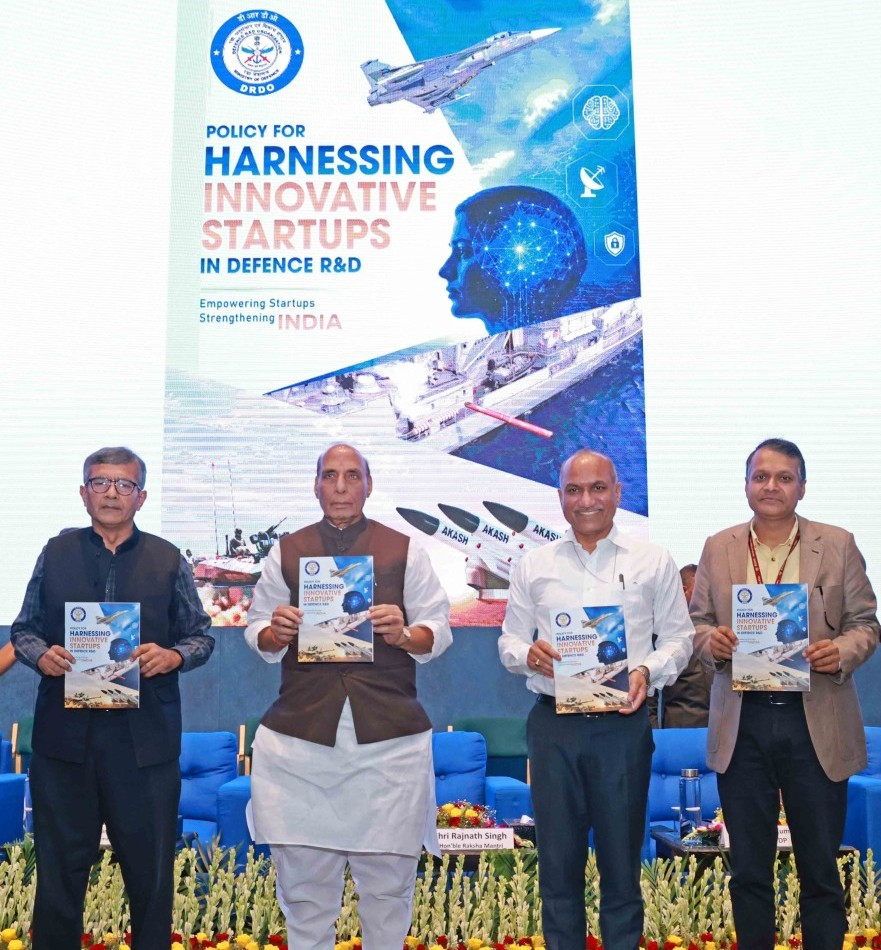
Credit PIB

Defence Minister Rajnath Singh has unveiled key policy initiatives during ‘VIMARSH’, a DRDO-Industry Synergy Meet, in New Delhi on September 15, 2026.
The initiatives include a comprehensive framework to lower technical and financial entry barriers for MSMEs & deep-tech start-ups, offering direct funding, incubation support and dedicated access to DRDO testing facilities.
A standardised, secure framework for sharing DRDO-developed software source codes with licensee industries was also launched to accelerate software-defined defence capabilities and obsolescence management, the Defence Ministry said.
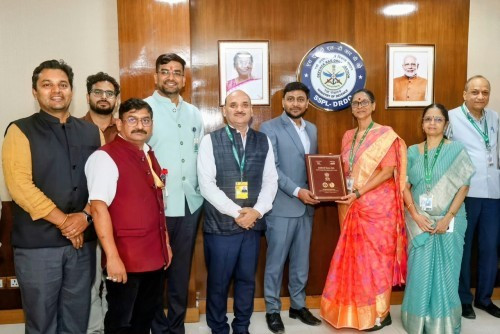
A total of nine Licensing Agreements for Transfer of Technology (LAToTS) were handed over to 13 manufacturing partners in the presence of the Defence Minister to enable commercial production of state-of-the-art systems, the Ministry said in a statement.
While addressing the event, the Defence Minister asserted that the DRDO-Industry collaboration should no longer be limited to production alone, but expanded across the entire value chain encompassing research, design, testing, certification, and manufacturing to transform India into a global hub for defence manufacturing.
“DRDO possesses knowledge and technology, the industry has scale and manufacturing capability, start-ups bring innovation and agility, and the youth hold the dream of a New India. When these four forces converge and move forward together, no goal is impossible,” Singh said.
He underlined that the goal of Viksit Bharat is not merely to build an economically strong nation, but to also make it technologically self-reliant, socially inclusive, environmentally sustainable, and strategically secure.
“By 2047, we must achieve Aatmanirbharta in critical technologies, a significant increase in indigenous content, multi-fold growth in defence exports, and a robust presence for India in global supply chains,” the Defence Minister said.
Describing the start-ups and MSMEs as the “new flag-bearers of innovation” in India, he said that these industries play a pivotal role in achieving the goal of Aatmanirbhar Bharat as they develop components, sub-systems etc. for major defence systems alongside state-of-the-art technologies.
The Defence Minister underscored the need to integrate MSMEs and start-ups as integral parts into the defence supply chain alongside large industries, expressing confidence that the new initiatives would create fresh opportunities for industry.
“MSMEs are the backbone of the Indian economy and a critical strength of the defence ecosystem. They need to consistently focus on quality, delivery, innovation, and global standards, while expanding partnerships with large companies,” he said.
The Defence Minister emphasised that a nation that possesses its own technology holds the power to shape its own future, adding that self-reliance must become an integral part of the country’s character and attitude.
“Companies that invest in new and emerging technologies today will become the leaders of tomorrow as in future warfare, the country that leads in technology will secure the strategic advantage,” he added.
The event was attended by Defence Secretary and Secretary, Department of Defence R&D and Chairman, DRDO, Rajesh Kumar Singh along with other senior MoD officials, DRDO scientists and representatives from the Defence Forces.
The Defence Secretary, while addressing the event, said that VIMARSH 2026, centered on the theme ‘Varta se Vikas’, has been strategically designed to align cutting-edge commercial innovation with national defence readiness and systematically integrate private sector capabilities into the core of the defence ecosystem.
“This forum serves as a key vehicle for transforming the national security framework from a mere transactional buyer-seller relationship into a collaborative, co-created technology ecosystem,” he said.
He also highlighted the transformation witnessed by the defence sector in recent years due to the Government’s self-reliance efforts.
“The expansion of technology transfer has not only facilitated the establishment of parallel production lines to meet the Defence Forces’ requirements, thereby directly benefiting MSMEs, but has also helped alleviate the constraints that previously hindered a limited manufacturing base.
“Till date, over 2,300 Technology Transfers (ToTs) have been handed over to more than 1,100 industries. Currently, we have made technologies related to approximately 50 missiles, developed by DRDO, available to the industry to foster increased participation,” the Defence Secretary noted.
A book titled ‘Defence Systems for Resilient Bharat – Advancing Aatmanirbharta in Defence’, a special compilation documenting significant defence systems developed by DRDO’s technology clusters between 2014 to 2026 was also released during the event, along with the guidelines for Human Resource Outsourcing Service Contracts in DRDO.
The guidelines provide a comprehensive framework for formulation of service specifications for the procurement, selection of suitable service providers, contract administration, performance monitoring and compliance with contractual as well as statutory obligations for Human Resource Outsourcing across DRDO labs.