Navy threat of offensive action led Pak to seek 'ceasefire': Vice Admiral Swaminathan on Op Sindoor



The threat of offensive action by the Indian Navy during Operation Sindoor was one of the key factors in Pakistan requesting a "ceasefire", Vice Admiral K Swaminathan said on Tuesday.
India launched Operation Sindoor in May, targeting terror hubs in Pakistan and PoK, in retaliation for the Pahalgam terror attack, in which 26 people lost their lives in April.
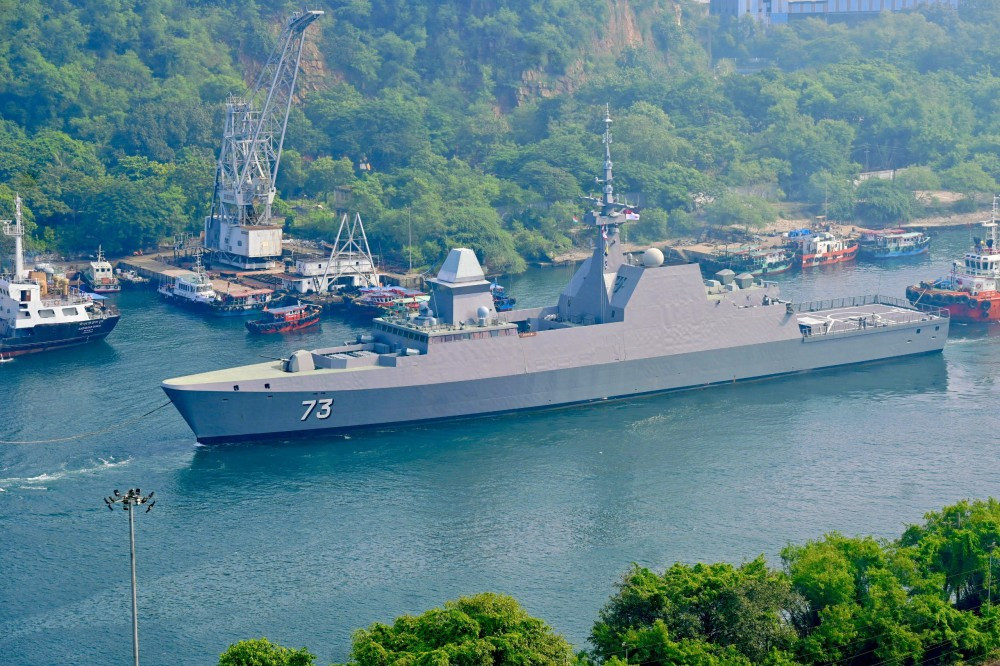
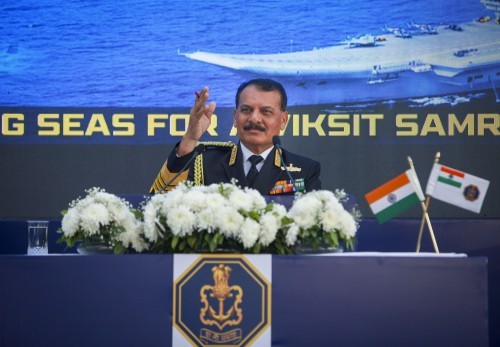
Addressing the media ahead of the Navy Day, Vice Admiral Swaminathan, who heads the crucial Western Naval Command, said Operation Sindoor saw an unprecedented mobilisation of more than 30 ships and submarines within a very short period.
He noted that for any Navy in the world to have 30 ships that are operational, that can be loaded and put out at short notice of four, five or six days, is a big deal.
"Our frontline ships were poised for combat off the Makran coast, under the umbrella of Vikrant Carrier Battle Group," he said.
The offensive deployment and posturing of the Indian Navy included a series of successful weapon firings in April, and it "forced Pakistan Navy to remain close to its own coast", he said.
"In fact, the threat of offensive action by the Indian Navy could be considered one of the important factors in Pakistan requesting a ceasefire," Vice Admiral Swaminathan said.
Elaborating further, he said the Navy was ready to strike. If the Navy had struck, the escalation would have been much beyond what was seen.
"We came very, very close to carrying out the strike. We took off some aircraft and the Air Force carried out the strikes across the border, and they struck," he said.
"If there was going to be further escalation, we would have gone inside. Our view is that they came to know that the Navy is moving in and therefore they asked for a ceasefire," the Vice Admiral said.
"We feel the Navy was instrumental in maintaining that escalation control and posing a threat to them. And because we posed a threat to them, we feel they sought the ceasefire," he said.
Speaking about a Turkish Navy ship in Pakistani waters during Operation Sindoor, Swaminathan said India had always expected that there would be some collusion, certainly between China and Pakistan, and Turkey may be a spoiler.
"We always expected that there would be some collusion. It was only left for us to see how good that collusion manifested in the form of hardware transfer, even while the operation was on," he said.
The Vice Admiral said that the Turkish Navy ship to Pakistan was pre-planned.
"The fact that Turkey colluded with Pakistan was something we had expected, and we saw the manifestation of that happening," he said.
He said the key takeaway of Operation Sindoor was that there was "very, very good political-military synergy" at the highest level.
There was also a synergy among the Armed Forces, and all three forces knew exactly what the other was doing, he said.
India and Pakistan reached an understanding on May 10 to stop all firings and military actions on land, air and sea, with immediate effect after four days of intense cross-border drone and missile strikes that brought the two countries teetering on the edge of full-scale war.