Indian defence firm delivers 106 turbojet-powered kamikaze drones to Army


Credit smgroupindia.com/

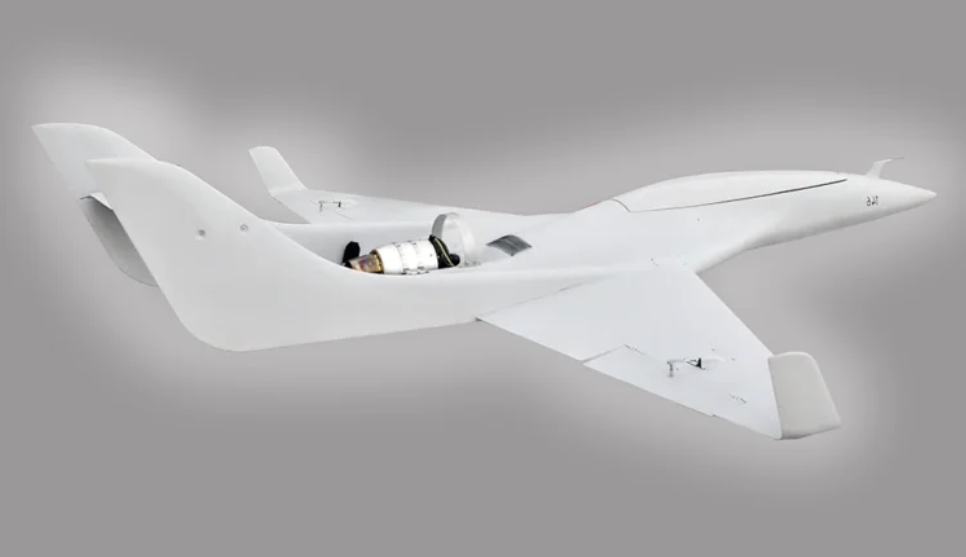
A defence firm has delivered to the Army 106 turbojet-powered kamikaze drones designed to engage high-value targets deep inside enemy territory and operate in contested electromagnetic environments, according to a statement issued on Thursday.
With an operational range of 180 km and speed of up to 450-km/ph, the drone – Peacekeeper (Agniveg) – is capable of conducting autonomous precision strike missions against critical military infrastructure, logistics hubs, command centres, radar installations and other strategic targets, defence technology firm SMPP said.
"Combining long-range reach, precision strike capability and the ability to strike at extremely high speeds, the system provides the Indian Army with a flexible and cost-effective option for prosecuting time-sensitive targets while reducing risk to personnel," it said in the statement.
According to SMPP, the drone is designed to operate in contested electromagnetic environments. It can continue mission execution despite hostile electronic warfare measures, including jamming and spoofing attempts.
"SMPP has completed the delivery of 100 jet-based peacekeeper (Agniveg) operational drones and six training drones to the Indian Army.
"It is a significant milestone in India's unmanned warfare capabilities and reinforces the nation's commitment to self-reliance in critical defence technologies," the statement said.
The delivery follows successful user trials in which the Peacekeeper (Agniveg) demonstrated a "Circular Error Probable (CEP) of less than five metres, showcasing an operational range of about 180 kilometres", while operating in a heavily jammed and spoofed environment, it said.
The performance highlights the system's precision, reliability and ability to operate in contested battlefield conditions.
The induction of the Peacekeeper (Agniveg) comes at a time when modern warfare is increasingly being shaped by precision-guided unmanned systems capable of delivering significant battlefield effects at a fraction of the cost of conventional strike platforms, SMPP said.
"The system bridges the capability gap between conventional artillery and long-range missile systems, providing commanders with a new layer of precision strike capability," it said.
Ashish Kansal, CEO and Director of SMPP, said, "The successful completion of Peacekeeper (Agniveg) deliveries to the Indian Army in a short time frame of six months is a significant milestone for SMPP and for India's indigenous defence manufacturing ecosystem."
Modern warfare is increasingly defined by precision, autonomy and affordability, and systems such as Peacekeeper are becoming critical force multipliers on the battlefield, he said.
The Peacekeeper programme reflects SMPP's ongoing evolution into a diversified defence technology company, he added.
Building on its leadership in ballistic protection systems, the company is expanding its presence across precision strike capabilities, drone and counter-drone systems, large and medium calibre ammunition and next-generation battlefield technologies, supporting India's vision of creating a resilient and self-reliant defence manufacturing ecosystem, the statement said.
"Having completed deliveries under the current order, SMPP has also offered an enhanced variant of the Peacekeeper (Agniveg) with extended operational range for future consideration," it said.
In April, the Indian Army had unveiled a key "technology roadmap" outlining technical and operational requirements in the domain of unmanned aerial systems (UAS) and loitering munitions, a move that comes amid the changing nature of warfare as seen in various conflicts.
The document provides visibility of long-term requirements of the Army in the field of UAS and loiter munitions to the industry and academia, officials had said.