BRAHMOS upgradation continuous project: NPOM CEO


Credit File photo / BNS

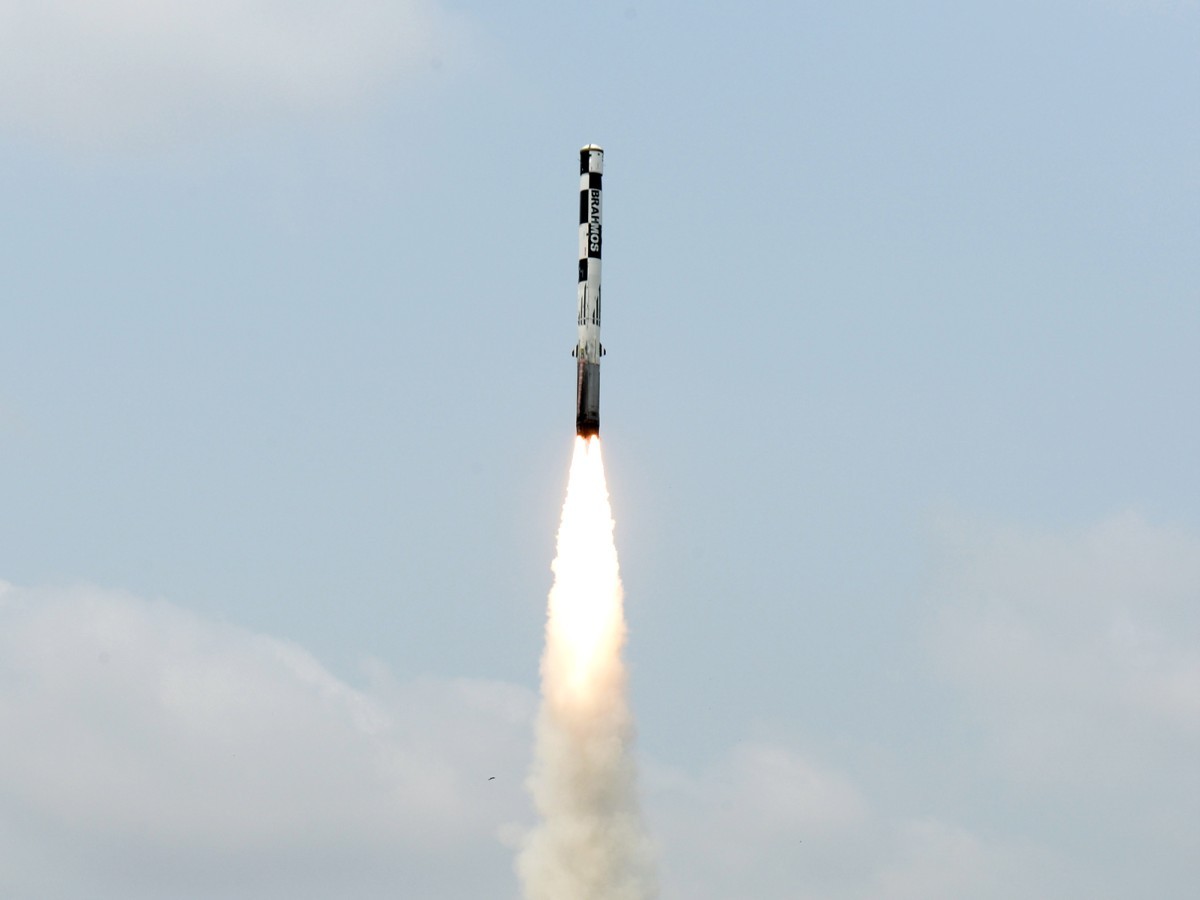
The upgradation and modernisation of BRAHMOS supersonic cruise missiles is a continuous project, with an aim of transition to hypersonic technologies, a top official of the Russian JV partner has said.
Equipped with advanced guidance and control systems, BRAHMOS is a modern precision strike missile that can be launched from submarines, ships, aircraft or land.
Speaking at a conference on cosmonautics last Friday, Alexander Leonov, CEO & Chief Designer of NPO Mashinostroreniya – the Russian JV partner – said Russia and India constantly upgrade BRAHMOS cruise missiles that they produce jointly and are engaged in work on hypersonic technologies.
“We constantly modernise these missiles, improving their characteristics. That is why this is a continuous work. Under the BrahMos project, work is also underway on small-sized missiles and hypersonic technologies,” Leonov was quoted as saying by the state-run TASS news agency.
The BRAHMOS supersonic cruise missile project is considered the brainchild of former Indian president Dr. APJ Abdul Kalam, who christened it after the Brahmaputra and Moskva rivers, known for their fierce and graceful natures.
The work under the BrahMos project began in 1998, and missile serial deliveries started from 2004. During Operation ‘Sindoor’ in May 2025, the formidable weapon dealt pinpoint strikes at crucial enemy targets.
Developed from the Russian anti-ship ‘Yakhont’ (Onyx) supersonic cruise missile, BRAHMOS has become a symbol of Indo-Russian cutting-edge defence cooperation, transiting from ‘Make in India’ to ‘Atmanirbhar Bharat’ with over 70 per cent indigenisation of components.