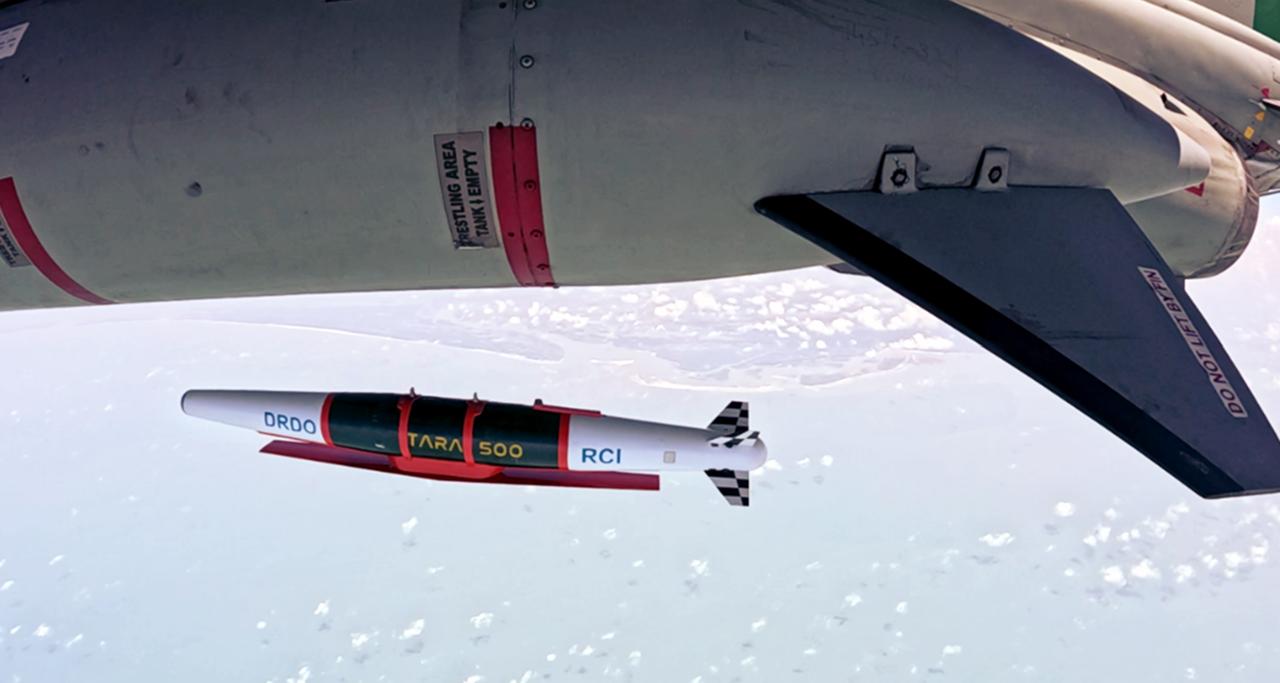
Maiden flight of indigenous UAV
With the successful flight of Nishant, the indigenous UAV, a new feather has been added in the history of Indian Aviation


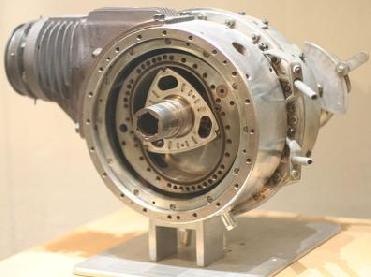
Caption: A file picture of Wankel Rotary Engine
Credit 10
Credit 10

KARNATAKA (BNS): The first ever indigenous Wankel Rotary engine, powering Nishant, the Unmanned Air Vehicle (UAV), took off from an abandoned runway in a village near Kolar in Karnataka. The UAV scaled up to an altitude of 1.8 km efficiently before cruising for 35 minutes.
According to defence press release, it is the first time that a Wankel engine has been developed within the country and UAV flown with an indigenous engine.
The Wankel engine is a type of internal combustion engine which uses a rotary design to convert pressure into a rotating motion instead of using reciprocating pistons. Its four-stroke cycle takes place in a space between the inside of an oval-like epitrochoid-shaped housing and a Reuleaux triangle shaped rotor. This design delivers smooth high-rpm power, from a compact size.
The Wankel engine was a developmental project, which originated at the DRDO through VRDE, Ahmednagar, and was jointly designed and developed, by NAL, a CSIR laboratory, VRDE, Ahmednagar, and ADE, Bangalore, the release said.
The Wankel engine is a type of internal combustion engine which uses a rotary design to convert pressure into a rotating motion instead of using reciprocating pistons. It delivers smooth high-rpm power, from a compact size. The DRDO Nishant is an UAV developed by India's ADE (Aeronautical Development Establishment) is used for reconnaissance, target acquisition, target designation, damage assessment and electronic surveillance.
According to defence press release, it is the first time that a Wankel engine has been developed within the country and UAV flown with an indigenous engine.
The Wankel engine is a type of internal combustion engine which uses a rotary design to convert pressure into a rotating motion instead of using reciprocating pistons. Its four-stroke cycle takes place in a space between the inside of an oval-like epitrochoid-shaped housing and a Reuleaux triangle shaped rotor. This design delivers smooth high-rpm power, from a compact size.
The Wankel engine was a developmental project, which originated at the DRDO through VRDE, Ahmednagar, and was jointly designed and developed, by NAL, a CSIR laboratory, VRDE, Ahmednagar, and ADE, Bangalore, the release said.
The Wankel engine is a type of internal combustion engine which uses a rotary design to convert pressure into a rotating motion instead of using reciprocating pistons. It delivers smooth high-rpm power, from a compact size. The DRDO Nishant is an UAV developed by India's ADE (Aeronautical Development Establishment) is used for reconnaissance, target acquisition, target designation, damage assessment and electronic surveillance.