Europe successfully orbits two Galileo navigation satellites
The Galileo constellations' seventh and eighth satellites have been successfully launched by Russian Soyuz rocket after a technical mishap misdirected two of the spacecraft last year.


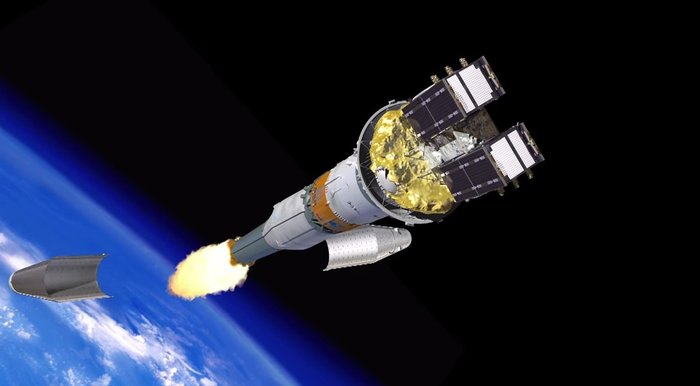
Caption: At 3 min 29 sec after the launch of Galileo's Soyuz the protective launcher fairing is jettisoned, revealing the two Galileo satellites attached to their dispenser atop the Fregat upper stage that will haul them most of the way into medium-Earth orbit. An ESA image

PARIS (BNS): Europe has successfully orbited two navigation satellites for its rival to America's GPS -- the first additions to the Galileo constellation since a technical mishap misdirected two spacecraft last year.
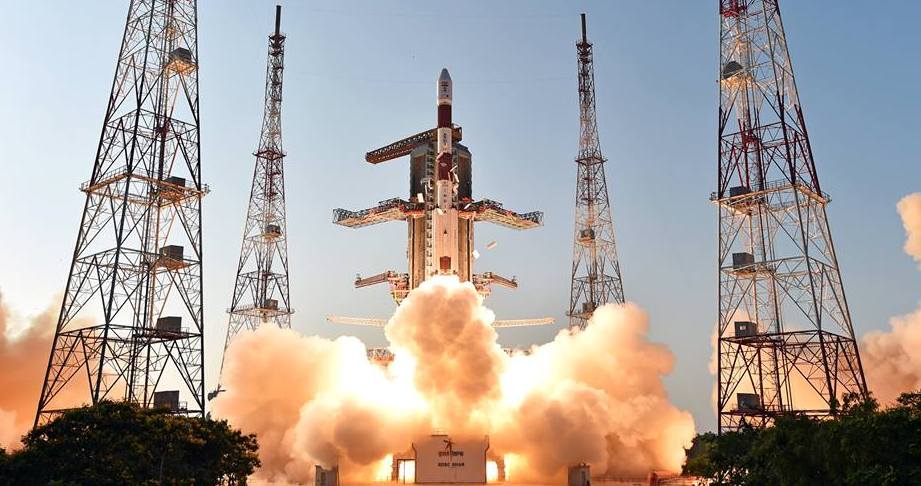
The Galileo constellations' seventh and eighth satellites lifted off from European spaceport in Kourou, French Guiana, at 2146 GMT Friday on a Russian Soyuz rocket - the one that had malfunctioned during last August's launch.
The medium-lift Soyuz performed a flight of nearly 3 hours and 48 minutes to deploy "Adam" and "Anastasia" -- the third and fourth Full Operational Capability (FOC) spacecraft for the Galileo global navigation satellite system, Aerianspace, which conducted the launch mission, said.
All the Soyuz stages performed as planned, with the Fregat upper stage releasing the satellites into their target orbit close to 23,500 km altitude, ESA said.
The new pair will join the six satellites already launched, in October 2011, October 2012 and August 2014.
"The deployment of the Galileo constellation is restarting with this successful launch," said Jean-Jacques Dordain, Director General of ESA.
"The tests in orbit of satellites 5 and 6 have demonstrated the quality and performance of the satellites, and the production of the following ones is well on track. Good news for Galileo."
Four more satellites are in testing or final integration and scheduled for launch later this year.
The multi-billion-euro satellite navigation and search and rescue system will ultimately consist of 30 orbiters, and is set to become fully operational by 2020.
The Galileo constellations' seventh and eighth satellites lifted off from European spaceport in Kourou, French Guiana, at 2146 GMT Friday on a Russian Soyuz rocket - the one that had malfunctioned during last August's launch.
The medium-lift Soyuz performed a flight of nearly 3 hours and 48 minutes to deploy "Adam" and "Anastasia" -- the third and fourth Full Operational Capability (FOC) spacecraft for the Galileo global navigation satellite system, Aerianspace, which conducted the launch mission, said.
All the Soyuz stages performed as planned, with the Fregat upper stage releasing the satellites into their target orbit close to 23,500 km altitude, ESA said.
The new pair will join the six satellites already launched, in October 2011, October 2012 and August 2014.
"The deployment of the Galileo constellation is restarting with this successful launch," said Jean-Jacques Dordain, Director General of ESA.
"The tests in orbit of satellites 5 and 6 have demonstrated the quality and performance of the satellites, and the production of the following ones is well on track. Good news for Galileo."
Four more satellites are in testing or final integration and scheduled for launch later this year.
The multi-billion-euro satellite navigation and search and rescue system will ultimately consist of 30 orbiters, and is set to become fully operational by 2020.