Researchers develop automatic landing system
Australian researchers have developed the first ever automatic emergency landing system that allow unmanned aircraft to land on their own.


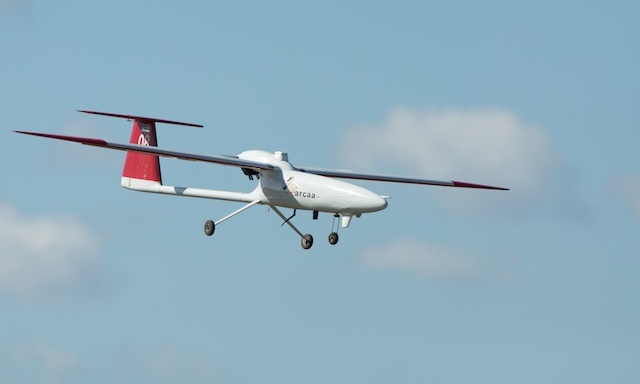
Caption: The Flamingo UAS in flight. Photo: ARCAA

MELBOURNE (PTI): Australian researchers have developed the first ever automatic emergency landing system that allow unmanned aircraft to land on their own.
The new discovery would mean that unmanned aircraft could soon play a leading role in disaster recovery efforts, Australian Research Centre for Aerospace Automation (ARCAA) director Duncan Campbell said.
The system programmed vessels to detect and select the best landing area, control the aircraft to a safe touchdown during engine failure, ABC reported.
The "detect, think, act" system allowed light vessels to enter high-risk zones, the report quoted Campbell as saying.
"The ability to send in multiple unmanned aircrafts, we can cover a wide area in a quick period of time, collect many, many images," he said, adding "Then what we can do on a large scale is quickly determine 'is there a risk to life? Are there people in trouble somewhere?'
"For example, looking at how we respond to floods in a timely manner, coming in after cyclones, and in bushfires, and in situations we term dirty, dull or dangerous," he added.
"The ability to slot in unmanned aircraft to gain situational awareness in a very rapid way [will] help the manned crews to better target their response," It's a world first for small, unmanned aircrafts," the Director said.
"The challenge isn't as great for large aircrafts, because they have the luxury of large computers and adequate power supplies," he said.
The new discovery would mean that unmanned aircraft could soon play a leading role in disaster recovery efforts, Australian Research Centre for Aerospace Automation (ARCAA) director Duncan Campbell said.
The system programmed vessels to detect and select the best landing area, control the aircraft to a safe touchdown during engine failure, ABC reported.
The "detect, think, act" system allowed light vessels to enter high-risk zones, the report quoted Campbell as saying.
"The ability to send in multiple unmanned aircrafts, we can cover a wide area in a quick period of time, collect many, many images," he said, adding "Then what we can do on a large scale is quickly determine 'is there a risk to life? Are there people in trouble somewhere?'
"For example, looking at how we respond to floods in a timely manner, coming in after cyclones, and in bushfires, and in situations we term dirty, dull or dangerous," he added.
"The ability to slot in unmanned aircraft to gain situational awareness in a very rapid way [will] help the manned crews to better target their response," It's a world first for small, unmanned aircrafts," the Director said.
"The challenge isn't as great for large aircrafts, because they have the luxury of large computers and adequate power supplies," he said.