Mars Odyssey spacecraft reboots successfully
NASA’s orbiter followed commands to shut down and restart, thus ensuring that all its backup systems were in place for any future use


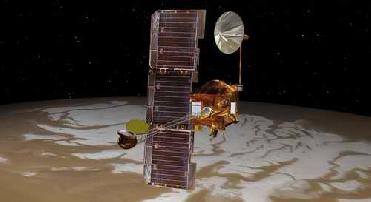
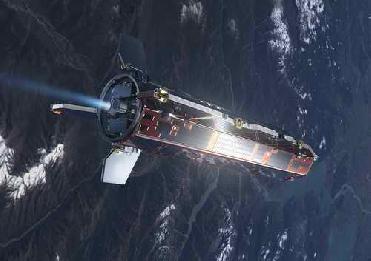
Caption: Artist concept of Odyssey. Image credit: NASA/JPL
Credit 10
Credit 10

WASHINGTON (BNS): A strategy by the engineers of NASA’s Mars Odyssey orbiter worked when it followed commands on Wednesday to shut down and restart. According to engineers, the strategy cleared any memory flaws accumulated in more than five years since Odyssey’s last reboot.
The procedure also restored Odyssey’s onboard set of backup systems, called the spacecraft's B side’ allowing its use when necessary, NASA said.
Odyssey Project Manager Philip Varghese of NASA’s Jet Propulsion Laboratory, Pasadena, California, said that for nearly two years, it has not been known whether the backup systems would be usable, so this successful reboot has allowed it to ascertain the health and availability for future use.
On Monday, an unexpected rise in temperature of the star camera in Odyssey’s navigation system prompted the postponement of the rebooting originally scheduled for the following day. Engineers identified the cause as a heater circuit that was temporarily stuck on. The circuit was turned off before Wednesday’s reboot.
Since 2001, Odyssey has been orbiting Mars and has never switched from its primary set of components, the A side,’ to the backup set, which includes an identical computer processor, navigation sensors, relay radio and other components. The space agency said that in March 2006, the B-side spare of a component for managing the distribution of power became inoperable. Analysis by engineers identified a possibility that rebooting Odyssey might restore that component, which proved to be a benefit of Wednesday’s procedure to refresh onboard memory.
After the reboot, the Odyssey team began a series of steps to carefully return the spacecraft to full functioning. “Following that path, the science instruments will be back to studying Mars by next week,” NASA said.
The procedure also restored Odyssey’s onboard set of backup systems, called the spacecraft's B side’ allowing its use when necessary, NASA said.
Odyssey Project Manager Philip Varghese of NASA’s Jet Propulsion Laboratory, Pasadena, California, said that for nearly two years, it has not been known whether the backup systems would be usable, so this successful reboot has allowed it to ascertain the health and availability for future use.
On Monday, an unexpected rise in temperature of the star camera in Odyssey’s navigation system prompted the postponement of the rebooting originally scheduled for the following day. Engineers identified the cause as a heater circuit that was temporarily stuck on. The circuit was turned off before Wednesday’s reboot.
Since 2001, Odyssey has been orbiting Mars and has never switched from its primary set of components, the A side,’ to the backup set, which includes an identical computer processor, navigation sensors, relay radio and other components. The space agency said that in March 2006, the B-side spare of a component for managing the distribution of power became inoperable. Analysis by engineers identified a possibility that rebooting Odyssey might restore that component, which proved to be a benefit of Wednesday’s procedure to refresh onboard memory.
After the reboot, the Odyssey team began a series of steps to carefully return the spacecraft to full functioning. “Following that path, the science instruments will be back to studying Mars by next week,” NASA said.